
Why Are My Brakes Squeaking Albany Ga
Service Center · Albany, GA
Why Are My Brakes Squeaking?
Sometimes a squeak is just morning dew burning off the rotors. Sometimes it's your brake pads telling you they're done. The Mercedes-Benz certified technicians at Albany Motorcars can tell the difference in minutes — and here's how you can start to, too.
A squeak is a symptom. The cause is what matters.
Brakes work by friction — pads clamping down on spinning rotors thousands of times between here and Leesburg. That friction system is designed to be quiet, so when it starts singing at every red light on Oglethorpe Boulevard, something has changed.
The good news: not every squeak means an expensive repair. The honest answer is that some noises are harmless and some are your last warning before pads grind into rotors. Below is how we sort one from the other.
Rather skip the diagnosis and let us listen? Book a brake inspection — it's quick, and we'll show you exactly what we find.
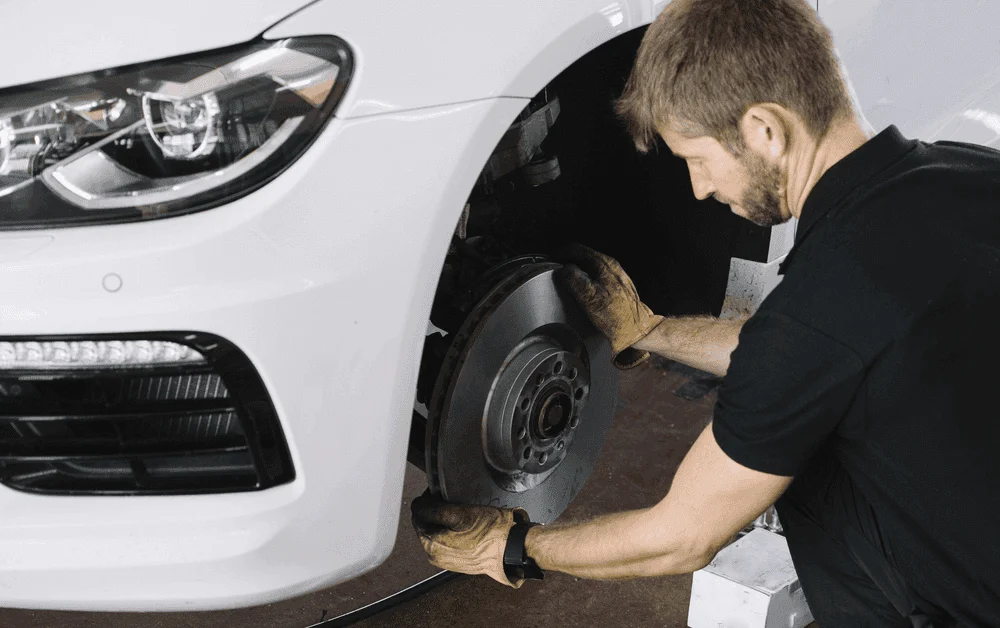
Five common reasons brakes squeak
Listed roughly from "relax" to "call us today." South Georgia humidity and stop-and-go city driving both play a role.
Morning moisture
Overnight dew or rain leaves a thin film of surface rust on the rotors. The first few stops scrub it off with a light squeal, then the noise disappears. In Albany's humidity, this one is practically a daily ritual — and completely harmless.
Dust and road grit
Sand and debris caught between pad and rotor can chirp or squeak intermittently. Often it works itself out; if it doesn't, a professional brake cleaning takes care of it before the grit scores the rotor surface.
Glazed or hardened pads
Heavy braking — say, a summer of towing or hard highway stops on US-19 — can overheat pads until the friction surface glazes. Glazed pads squeal and, more importantly, stop the car less effectively. They should be replaced.
The wear indicator
Most brake pads include a small metal tab engineered to squeal against the rotor when pad material runs low. A steady, high-pitched squeal every time you brake is this indicator doing its job. It means: schedule pad replacement soon, on your terms — not the road's.
Metal-on-metal grinding
If the squeak has turned into a grind, the pads are gone and the caliper backing plate is chewing into the rotor. This damages rotors fast and compromises stopping power. Stop driving on it and call our service line at 229-304-1327.
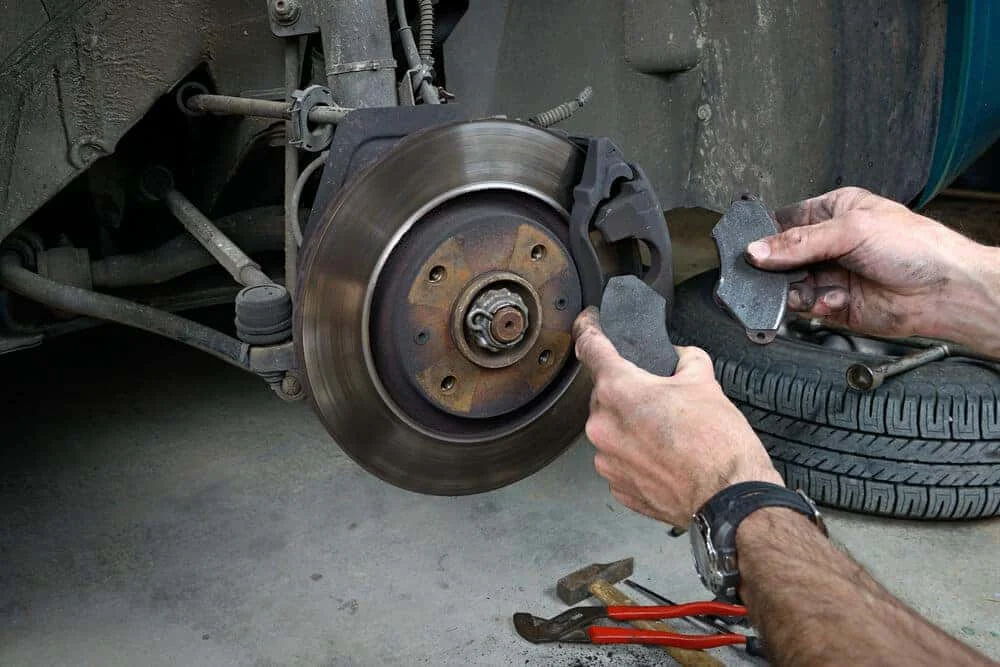
Don't wait for these signs
A squeak paired with any of the following means the brake system needs attention now, not at your next scheduled service:
- Grinding or scraping — pad material is exhausted and metal is contacting metal.
- Vibration or pulsing in the pedal or steering wheel — often warped rotors.
- Pulling to one side when braking — uneven pad wear or a sticking caliper.
- Longer stopping distances or a soft, spongy pedal — possible fluid or hydraulic issue.
- A brake warning light on the dash — your vehicle already ran the diagnosis for you.
Brake service the way Mercedes-Benz intended
Every brake job at 805 East Oglethorpe Boulevard is handled by factory-trained technicians using genuine Mercedes-Benz parts — and that goes for the pre-owned vehicles we service, too, no matter the badge on the hood.
Certified technicians
Trained on your exact model, from a 2012 C-Class to a brand-new EQE.
Genuine parts
OEM pads and rotors engineered for quiet, consistent stopping power.
Service specials
Rotating service specials that keep maintenance from wrecking the budget.
Buy now, pay later
Flexible service financing so a needed repair never has to wait on payday.
Quick answers from our service desk
Is it safe to drive with squeaking brakes?
Briefly, usually yes — especially if the squeak fades after a few stops. But a persistent squeal is the wear indicator, and once it appears you're on the clock. Grinding means stop driving and get it looked at immediately.
How long do brake pads last?
Typically 30,000–70,000 miles depending on driving style. City driving around Albany — with its frequent stops — wears pads faster than highway miles to Tifton or Americus. We measure pad thickness at every service visit so you're never guessing.
Do I need new rotors every time I get new pads?
Not always. If rotors are within spec and unscored, new pads alone may do it. If they're worn thin, warped, or grooved, replacing them is the only way to get quiet, even braking. We'll show you the measurements either way — candid answers are kind of our thing.
Can you check my brakes during an oil change?
Absolutely. A brake inspection is part of our multi-point check. Pair it with an oil change and knock out two jobs in one visit.
Let's make that squeak go away
Bring it by 805 East Oglethorpe Boulevard and we'll listen, inspect, and give you a straight answer — whether the fix is a cleaning, new pads, or nothing at all.
Questions first? Contact our service team — or browse current service specials before you book.